Key Takeaways
- A franchise second career works best when it uses the management, financial, and relationship skills you built over decades.
- Owners over 50 should match the franchise term, often 10 years or more, to their working horizon and plan the exit from the start.
- Federal law prohibits lenders from denying credit based on age, so a well-prepared applicant over 50 can qualify for SBA-backed financing.
- Semi-absentee, B2B, and multi-unit models often suit second-career owners who want to lead rather than work every shift.
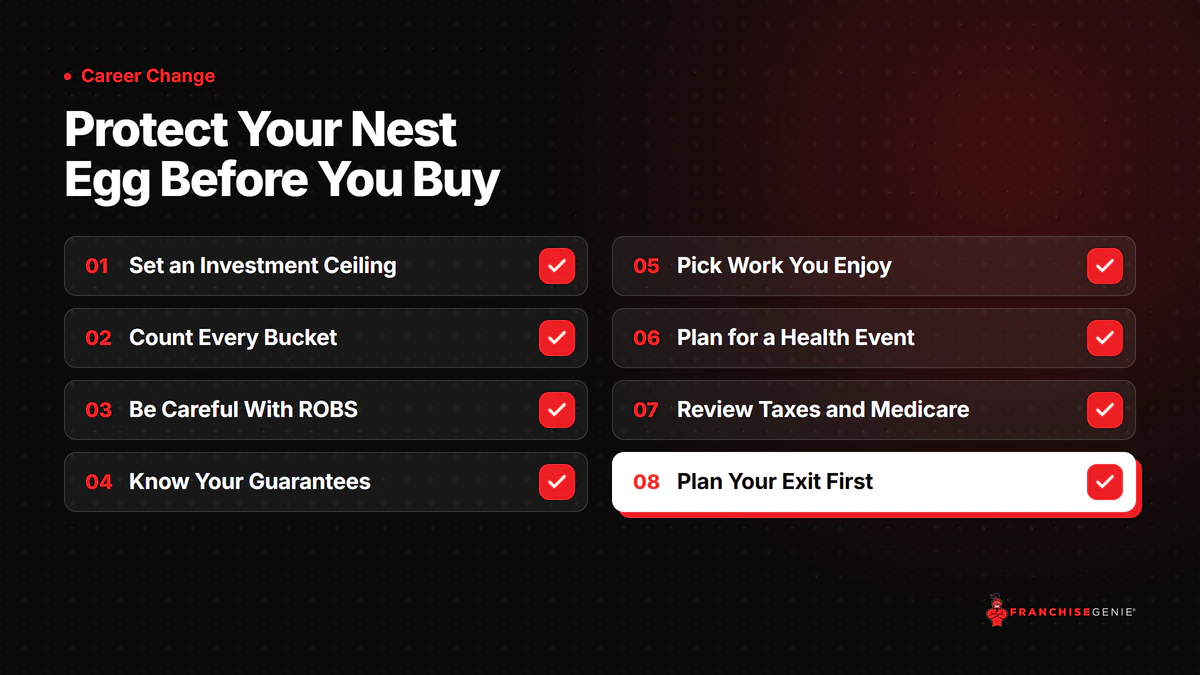
- Protecting retirement savings matters more after 50, because there is less time to recover from a loss.
A franchise second career lets you put decades of management, financial, and people skills to work in a business you own. After 50, the right model usually emphasizes leadership over labor, fits a defined working horizon, and keeps your retirement savings protected. The experience you bring is a real advantage. The time you have to recover from a mistake is shorter.
People reach this point from many directions. Some have hit a ceiling in their careers. Some were offered an early retirement package. Some simply want work that is theirs. What they share is a long resume and a clear sense that the next chapter should count.
Why a franchise second career appeals after 50
By your 50s, you have probably managed people, budgets, vendors, and customers. You have seen businesses run well and badly. You know how to hire, how to read a P&L, and how to stay calm when things break. Those are the skills a franchise rewards.
A franchise also removes some of the work that makes starting from scratch exhausting. The franchisor has already built the brand, the operating manual, the supply chain, and the training. Your job is to execute the system in your market and lead the team.
Second-career buyers commonly want:
- Ownership and equity after years of building value for an employer
- Control over their time, especially as family priorities shift
- Meaningful work that uses what they know
- A sellable asset or something to pass on to family
What changes when you buy a franchise after 50?
The fundamentals of due diligence stay the same. Three things shift.
Your time horizon
Franchise agreements often run 10 years or more, with renewal options. If you sign at 56, the initial term may carry you to 66. Ask yourself whether you want to be running this business at the end of the term, selling it, or handing it to someone else. That answer should shape which brands you consider.
Your risk capacity
At 35, a failed business is painful but recoverable. At 58, losing a large share of your retirement savings can change your life for good. Set an investment ceiling first, then look at brands that fit under it.
Your energy and health
Be honest about the physical demands. Some concepts require long days on your feet, early mornings, and weekend shifts. Others are run from an office or home. Neither is right or wrong, but the fit matters more at 60 than at 30.
Which franchise models fit a second career?
| Model | Why it can fit after 50 | What to watch |
|---|---|---|
| Semi-absentee, manager-run | Uses leadership skills, limits owner hours | Higher capital needs, heavy first-year involvement |
| B2B services | Uses professional networks and corporate experience | Often depends on active selling |
| Home services | Recurring local demand, manageable investments | Crew hiring and retention |
| Multi-unit | Builds a larger asset that can be sold | More capital, more complexity, more management layers |
| Health and wellness | Mission-driven, community-oriented | Some segments carry regulatory or licensing demands |
Leading rather than doing
Many second-career owners map to The Manager of Managers, who wants dependable owner earnings while a general manager handles execution, or The Freedom Architect, who designs a life first and a business to serve it. Our guide to franchise owner personality explains how temperament and goals shape which archetype fits.
Building toward a portfolio
Some buyers in their 50s want to build something bigger than a single location. Becoming a multi-unit franchise owner can create a more valuable business to sell or pass down, but it requires more capital and strong managers. The Portfolio Builder and The Empire Builder fit here.
Starting smaller
Others prefer to test ownership before committing fully. A franchise side hustle can let you start a lower-hour model while still employed, then scale up if it fits.
How to fund a franchise second career
SBA-backed loans
Many franchise buyers use SBA 7(a) loans through banks and other approved lenders. The Equal Credit Opportunity Act prohibits lenders from discriminating based on age, so a well-prepared applicant in their 50s or 60s can qualify. Lenders may still ask about your succession plan or require life insurance as a loan condition.
Savings and home equity
Many second-career buyers have built significant savings or home equity. Using them reduces debt but puts personal assets at risk. Decide how much you can lose before you decide how much to invest.
Retirement accounts
A Rollover as Business Startups (ROBS) structure lets you use 401(k) or IRA funds without an early-withdrawal tax. It concentrates retirement money in one business and carries compliance obligations. Use it only with a CPA and an experienced provider.
A hypothetical example
Consider a hypothetical 54-year-old, Karen, a regional sales director with $350,000 in accessible savings and a 401(k) she does not want to touch. She sets a $200,000 ceiling on what she will put at risk and plans to work for about 12 more years. That points her toward a B2B services franchise that uses her sales skills, fits her budget with modest SBA financing, and could be sold or transferred near the end of its initial term. A large food concept with a 20-year lease does not fit her horizon.
Risks to manage in a second career
- Health insurance before Medicare. If you leave an employer plan before 65, price COBRA, a spouse’s plan, or marketplace coverage carefully.
- Personal guarantees. Leases and loans typically require them, which puts personal assets behind the business.
- Underfunding the ramp. Plan for extra working capital and 12 to 18 months of personal expenses. Many new owners take little or no pay in year one.
- Earnings expectations. Nobody can tell you what you will earn. Owner income varies widely by brand, market, and execution. FDD Item 19 is the only place a franchisor can legally share performance data, and not every brand includes one.
- Exit risk. Read the transfer and renewal sections of the franchise agreement with a franchise attorney. Transfer fees and franchisor approval rights affect how and when you can sell.
Doing it with a spouse
Many second-career owners buy alongside a spouse. That can bring complementary skills and shared purpose, and it concentrates household risk. Our guide to the husband and wife franchise covers how couples divide roles, sign guarantees, and protect the marriage.
Free resources worth using
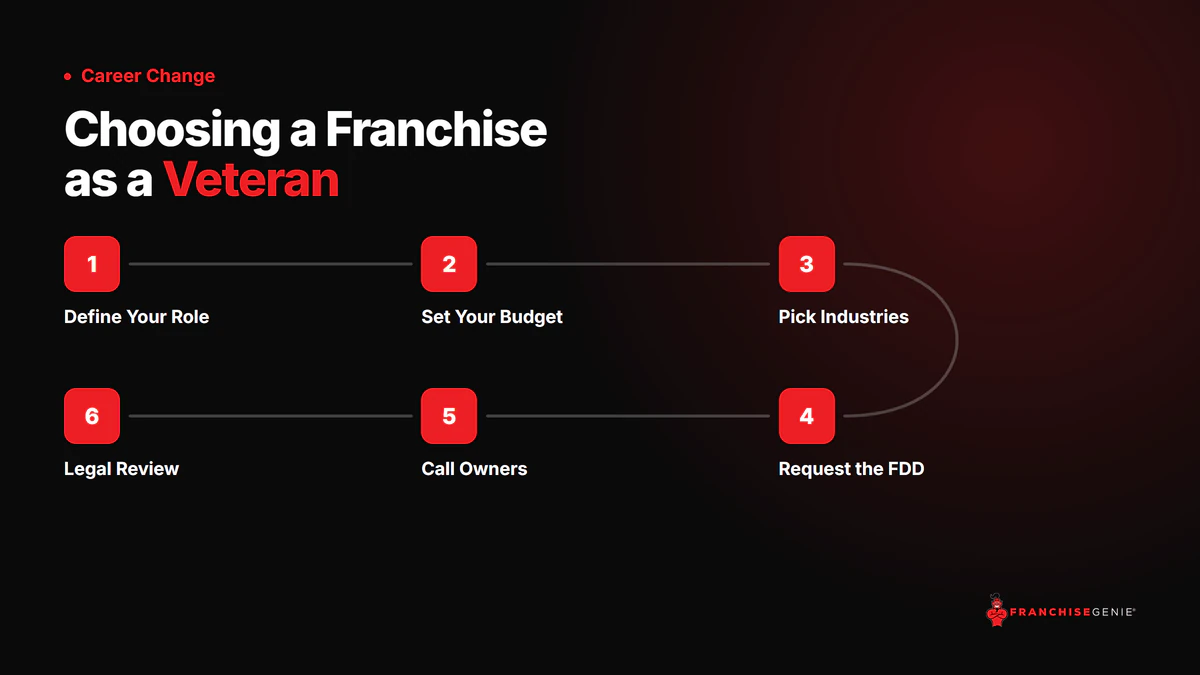
SCORE offers free mentoring from experienced business owners, many of whom launched businesses later in life. If you served in the military, the SBA’s resources for veteran-owned businesses include training and counseling, and many franchisors offer incentives through the IFA’s VetFran program.
If you are still in a corporate role and planning your exit, our playbook on leaving corporate to buy a franchise covers runway, timing, and restrictive covenants.
Your next step
A second career built on ownership can be the most satisfying chapter of your working life, as long as the model fits your horizon, your energy, and your savings.
Start by getting clear on the role you want to play and the risk you can carry. Our seven-question assessment matches you to an owner archetype and three industry categories based on those answers. When you are ready, take the free Franchise Genie assessment.
Frequently Asked Questions
Is 50 too old to buy a franchise?
No. Many franchise owners start in their 50s or later, and franchisors often value the management experience, capital, and steadiness that come with age. The questions that matter more are how long you want to work, how much of your savings you can put at risk, and which ownership model fits your energy. Answer those before choosing a brand.
Can I get an SBA loan for a franchise at 55 or 60?
Age by itself should not block you. The Equal Credit Opportunity Act prohibits lenders from discriminating against applicants based on age. Lenders evaluate credit, cash injection, collateral, experience, and the business plan. Some may ask about succession or require life insurance as a condition of the loan. An SBA preferred lender can explain what they will need from you.
What kind of franchise is best for a second career?
The best fit depends on your goals and how involved you want to be. Second-career owners often prefer semi-absentee models led by a general manager, B2B services that use professional experience, or home services with recurring local demand. Labor-heavy, long-hour concepts can be a poor fit if you want flexibility. Match the model to your skills and planned working years.
How do I protect my retirement savings when buying a franchise in my 50s?
Set a ceiling on the amount you are willing to lose before you look at brands, and keep a separate personal reserve. Be cautious with retirement rollover structures such as ROBS, which concentrate savings in one business. Consider keeping some outside income during the launch. A fee-only financial planner and a CPA can model worst-case scenarios before you commit.