Key Takeaways
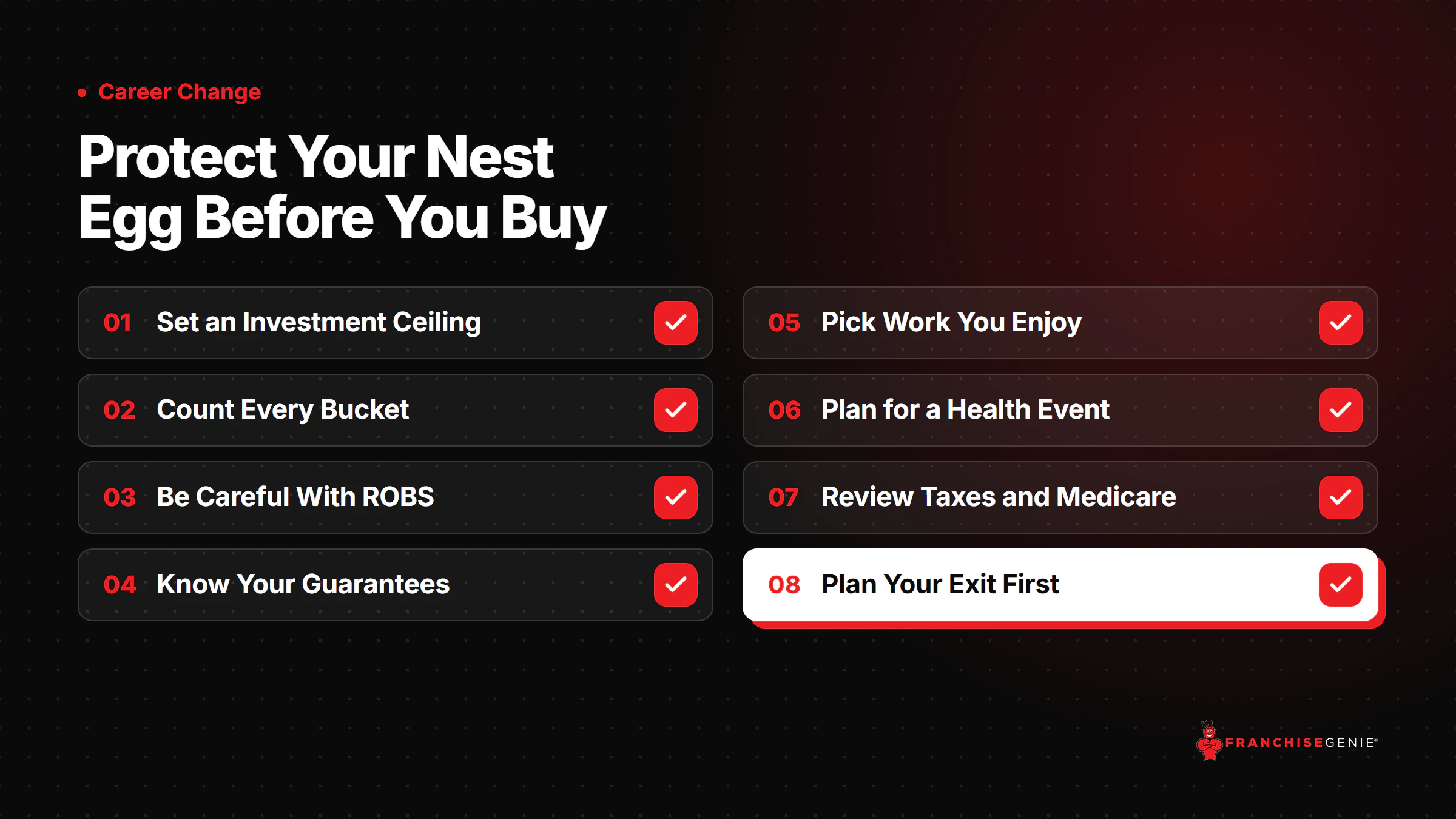
- Retirees should cap how much of their nest egg goes into a franchise so that a business setback cannot derail their retirement.
- Semi-absentee and low-overhead models usually suit retirees better than concepts that need long on-site hours or large build-outs.
- Franchise agreements often run 10 years or more, so plan your exit, resale, or family transfer before you sign.
- Using retirement accounts to fund a franchise, such as through a ROBS structure, carries specific risks and needs a CPA and an experienced provider.
- Business income can affect taxes, Social Security, and Medicare premiums, so review the full picture with a tax professional first.
A franchise for retirees can add income, purpose, and a daily reason to get out of the house. It works best when you protect the bulk of your nest egg, choose a model that does not demand 60-hour weeks, and plan your exit before you sign. Approached carelessly, it can put the savings you spent decades building at real risk.
Many retirees discover that a few months of golf and travel leave them restless. They miss solving problems, leading people, and being part of a community. A franchise offers a structured way back into meaningful work, with a playbook, training, and support. The stakes are different than they were at 40, though, and the decision should reflect that.
Why consider a franchise for retirees?
Retirees bring advantages that younger buyers often lack. Decades of management experience. Patience. A professional network. Often, a paid-off home and a steady base of income from a pension or Social Security that reduces the pressure on the business to pay the bills immediately.
That last point matters. An owner who needs the business to replace a salary by month six makes different decisions than an owner who can let it build. Retirees with stable base income can choose models with slower ramps and focus on running the business well.
The main reasons retirees buy a franchise tend to be:
- Purpose and structure. A reason to plan the week and a team to lead.
- Supplemental income. Something to support travel, family, or rising healthcare costs.
- Community. Many local businesses put owners in daily contact with neighbors and customers.
- Legacy. A business that children or grandchildren could one day run.
How to protect your nest egg
This is the most important section of this article. Money lost in your 60s or 70s has less time to recover than money lost in your 40s.
Set an investment ceiling first
Decide the maximum you can invest without changing your retirement lifestyle if the business fails completely. Then work backward to find models that fit. A fee-only financial planner can help you set that number with your full picture in view.
Count every bucket
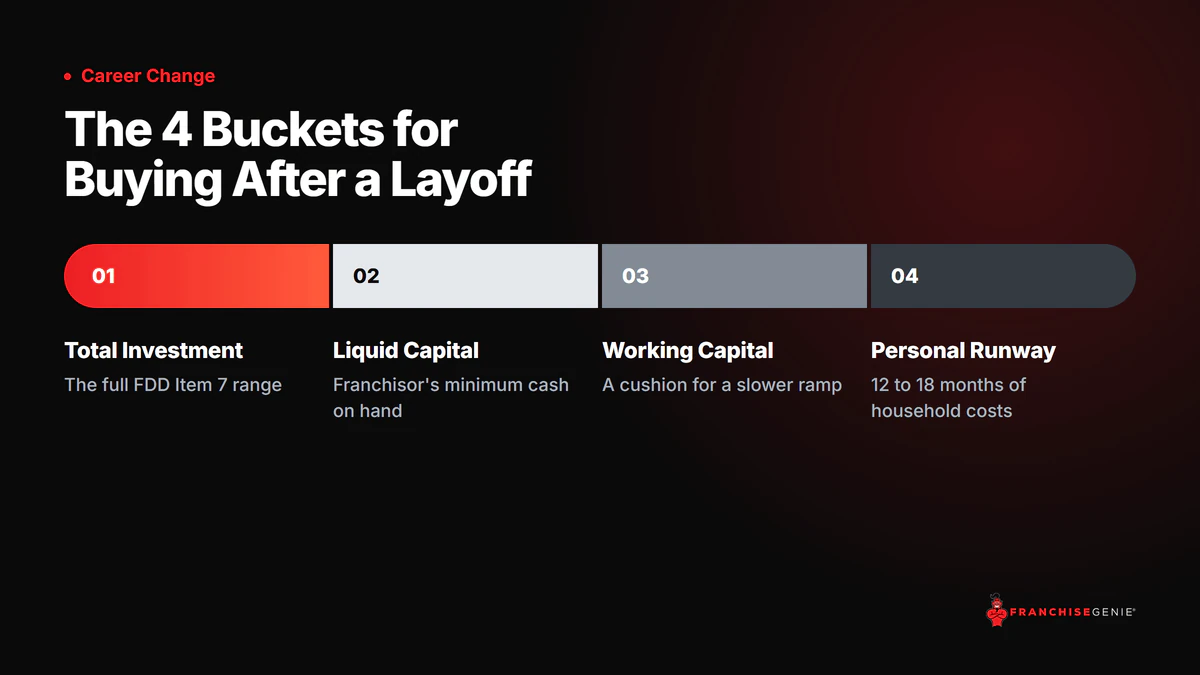
Plan for the total investment in Item 7 of the Franchise Disclosure Document, the franchisor’s liquid capital requirement, extra working capital for a slow ramp, and a reserve for your own household. Our guide to how to finance a franchise explains how these pieces fit together.
Be careful with retirement accounts
Some buyers fund a franchise with a Rollover as Business Startups (ROBS) structure, which uses 401(k) or IRA funds without an early-withdrawal tax. It is legal when set up correctly, but it concentrates retirement money in a single business and comes with ongoing compliance requirements. Read our explainer on ROBS franchise financing, and do not proceed without a CPA and an experienced provider.
Understand personal guarantees
Commercial leases and SBA loans usually require a personal guarantee. That means your personal assets can be on the hook if the business cannot pay. Ask an attorney how a guarantee interacts with your estate plan and any assets you share with a spouse.
A hypothetical example
Consider a hypothetical retired couple, Linda and Paul. They have $1.2 million in retirement savings, a pension that covers most of their expenses, and a paid-off house. They decide that $200,000 is the most they would put at risk. That rules out a large food concept with a multi-hundred-thousand-dollar build-out. It leaves room for a home-based B2B service or a semi-absentee home services model, which keeps their retirement plan intact even in the worst case.
Which franchise models suit retirees?
The right model depends on how much you want to work and what kind of work you enjoy. Several patterns tend to suit retirees.
| Model type | Why it can fit | Watch out for |
|---|---|---|
| Semi-absentee with a general manager | Uses leadership skills, limits your hours | Higher upfront cost to cover a manager’s salary |
| Home-based or office-based B2B services | Lower overhead, no retail lease, weekday hours | Often requires active selling and networking |
| Senior care and home care | Mission-driven, community-focused | Emotionally demanding, heavy on hiring and compliance |
| Home services (cleaning, lawn, handyman) | Steady local demand, manageable investment | Crew management and seasonal swings |
| Food and retail | Familiar consumer brands | Long hours, large leases, thin margins |
Retirees who want flexible hours often map to The Freedom Architect, who designs a life first and then a business that protects it, or The Lifestyle Operator, who wants name on the door and hands on the wheel on their own schedule. Those thinking about family often fit The Legacy Builder.
Pick the work you will enjoy
Retirees have earned the right to like their work. If you do not want to hire 25 hourly employees, avoid labor-heavy models. If you dislike cold outreach, avoid B2B concepts that live on prospecting. Talk to current owners about what a typical Tuesday actually looks like.
What a franchise for retirees costs in time and energy
Many franchise brands describe themselves as semi-absentee, but even those models usually need more of the owner’s time during the first year. Plan for a heavier launch period: site selection, hiring, training, and opening. A model that settles into 10 to 20 hours a week of leadership may need far more in the first six months.
Health also deserves an honest conversation. If a health event took you out of the business for three months, who would run it? A strong general manager, a spouse, or an adult child with a defined role are all reasonable answers. “We’d figure it out” is not.
Taxes, Social Security, and Medicare
Business income interacts with retirement benefits in ways that catch many owners off guard.
- Social Security earnings test. If you claim benefits before full retirement age, self-employment earnings above an annual limit can temporarily reduce benefits.
- Taxation of benefits. Additional income can increase the portion of Social Security benefits subject to income tax.
- Medicare premiums. Higher income can raise Part B and Part D premiums through income-related surcharges.
- Entity structure. How you structure the business affects self-employment tax and what you can deduct.
These rules change annually. Review them with a CPA before you sign, not after your first tax return.
Plan your exit before you sign
A franchise agreement often runs 10 years or more. If you are 65 when you sign, you will be 75 or older at the end of the initial term. Ask yourself what you want to happen at 70.
Read the transfer section of the franchise agreement with a franchise attorney. Look for transfer fees, the franchisor’s right of first refusal, approval requirements for a buyer or a family member, and what happens if you die or become disabled. Brands differ widely here. Our guide to how to sell a franchise covers the process in more detail.
Special situations for retirees
Retired veterans. If you retired from military service, you may qualify for veteran incentives through the IFA’s VetFran program, and the SBA offers dedicated resources for veteran-owned businesses. Our guide to franchises for veterans covers both.
Women entering ownership later in life. Many women buy their first business after a career or after raising a family. Our article on franchises for women covers funding, networks, and models.
Executives retiring early. If you are leaving a corporate role in your 50s or early 60s, the playbook for leaving corporate to buy a franchise covers runway planning and exit timing.
Get a second set of eyes
Free help exists. SCORE pairs aspiring owners with experienced business mentors, many of whom are retirees themselves. A mentor can review a franchisor’s claims and your plan from the perspective of someone who has run a small business.
On income, be skeptical of anyone who tells you what you will earn. Owner earnings depend on the market, the brand, and execution, and averages hide wide variation. FDD Item 19 is the only place a franchisor can legally share performance data, and not every brand provides one. Use it alongside conversations with current owners.
Your next step
The best franchise for a retiree is one that adds purpose without threatening the security you already built. Start by defining your investment ceiling, your hours, and the kind of work you would enjoy.
Our seven-question assessment turns those answers into an owner archetype and three industry categories that fit your goals and risk appetite. When you are ready, take the free Franchise Genie assessment and see which models deserve a closer look.
Frequently Asked Questions
Is it a good idea to buy a franchise after retirement?
It can be, if the goal is purpose and supplemental income rather than rebuilding your savings. Retirees bring management experience, patience, and community connections. The risk is concentration, because money lost late in life has less time to recover. Limit the share of savings you invest, choose a lower-stress model, and plan your exit before signing.
How much of my retirement savings should I put into a franchise?
There is no universal percentage, and the right amount depends on your income sources, expenses, health, and other assets. A common planning principle is to invest only what you could lose without changing your retirement lifestyle. A fee-only financial planner and a CPA can model scenarios, including the worst case, before you commit any funds.
Will owning a franchise affect my Social Security benefits?
It can. If you claim Social Security before full retirement age, net self-employment earnings above an annual limit can temporarily reduce benefits. Higher income can also raise the share of benefits that are taxed and increase Medicare premiums. Rules and thresholds change each year, so review them with a CPA or the Social Security Administration before you buy.
What happens to my franchise if I want to stop working in five years?
You generally have three paths: sell the business to a buyer the franchisor approves, transfer it to a family member under the agreement's transfer rules, or hire a manager and step back. Each path depends on the franchise agreement, which often includes transfer fees and franchisor approval rights. Read those sections with a franchise attorney before you sign.