Key Takeaways
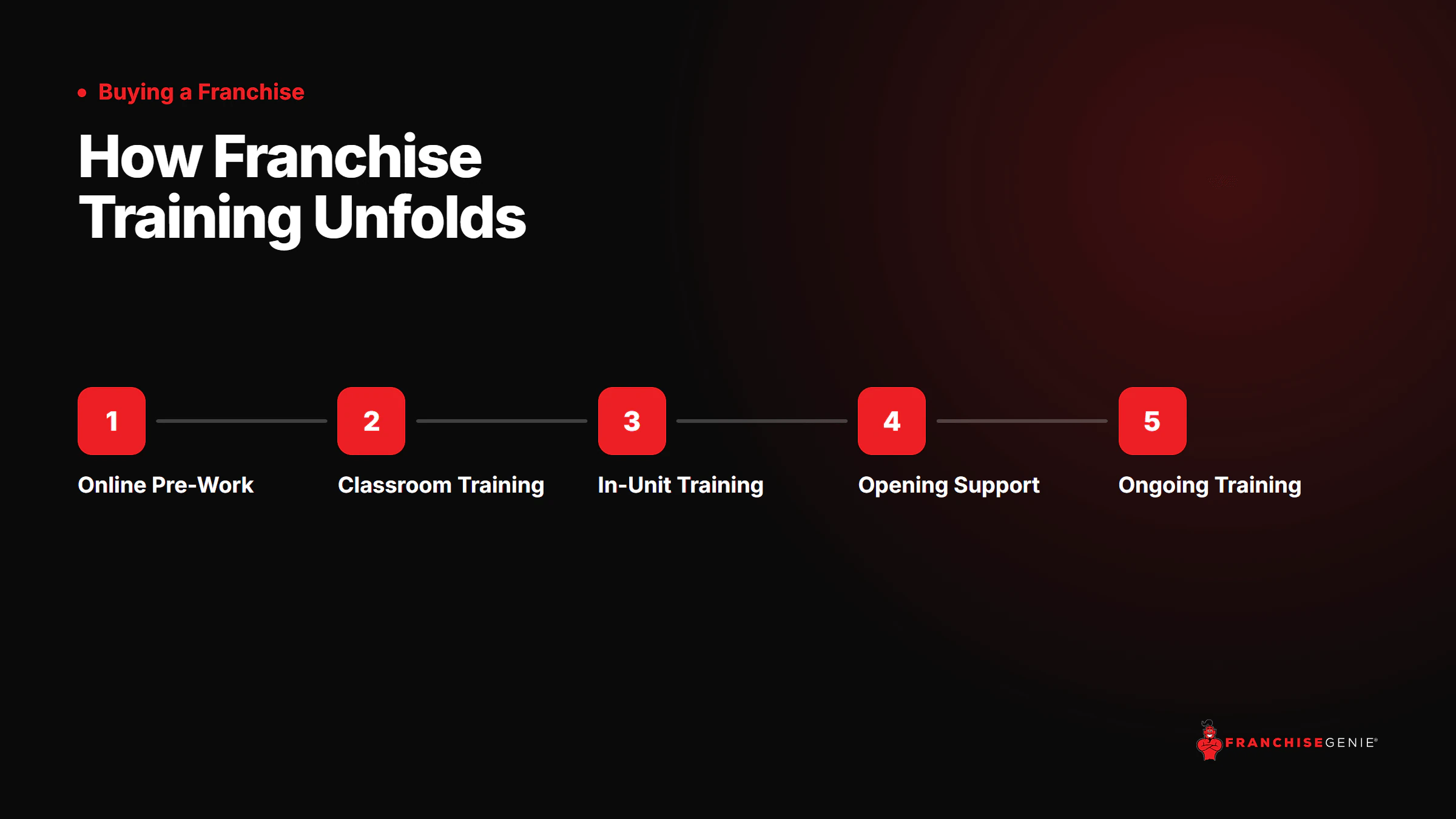
- Franchise training usually combines online modules, classroom sessions at headquarters, and hands-on work in an operating unit, followed by on-site support around opening.
- Initial programs commonly run from one to six weeks depending on the complexity of the business, and Item 11 of the FDD describes the length, location, and content.
- Travel, lodging, and wages for staff who attend training are often the franchisee's cost, so check whether they are included in your budget.
- You get the most from training by arriving prepared, asking about edge cases, and building relationships with trainers and fellow franchisees.
Franchise training is the program a franchisor uses to teach you and your team how to run the business its way before you open. It typically combines online modules, classroom sessions at headquarters, and hands-on time in an operating unit, followed by on-site support around opening day. Initial programs commonly last one to six weeks, depending on how complex the business is.
Training is one of the main things you are buying when you buy a franchise. Owners who come from other careers rely on it to learn everything from scheduling and pricing to the software that runs the business. The quality of a franchisor’s training program tells you a lot about the quality of its ongoing support.
This guide covers what training includes, how long it lasts, what it costs, and how to get the most out of it. For the full sequence of buying steps, see our guide on how to buy a franchise.
When does franchise training happen?
Initial training usually takes place after you sign the franchise agreement and before you open. Its timing depends on your model.
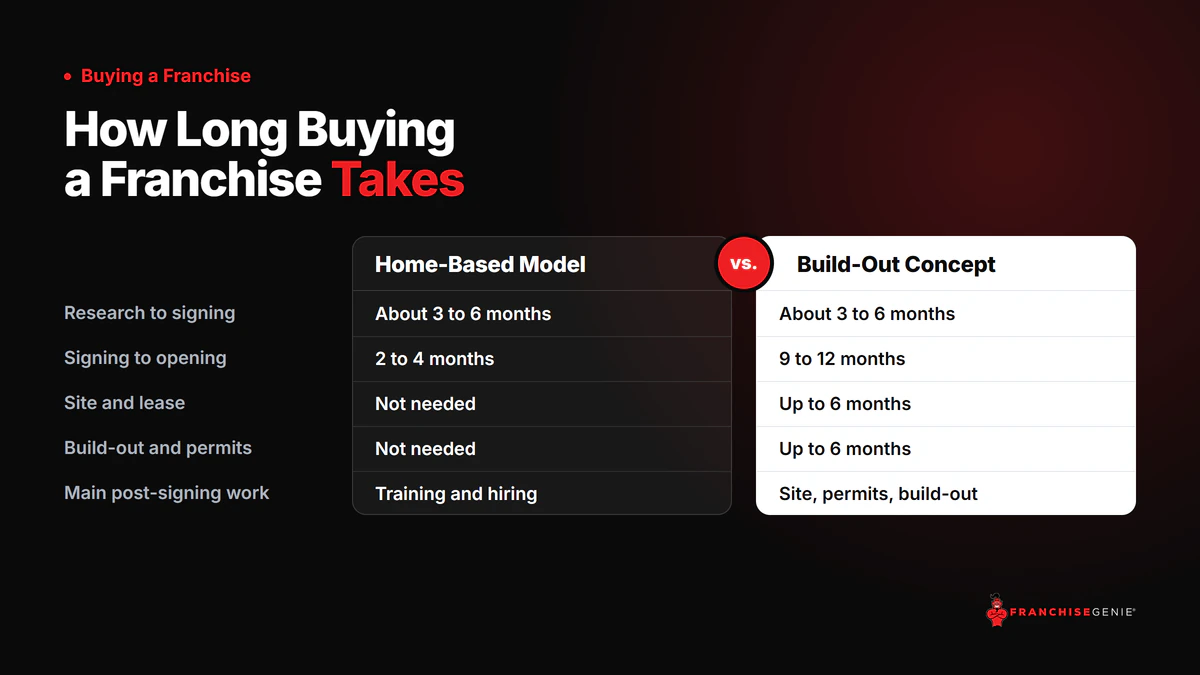
For home-based and mobile service franchises, training often starts within a few weeks of signing, since there’s no build-out to wait for. For storefront concepts, franchisors typically schedule training so it ends shortly before opening, after you have secured a location and construction is underway. That way, what you learn is fresh when you need it. If you are still finding a location, see our guide to franchise site selection, since site timing often sets the training calendar.
Your franchise agreement will usually require you to complete training before opening, and it may set a deadline. Training fits into the broader checklist of tasks that come after signing a franchise agreement.
What does franchise training include?
Programs vary widely, but most cover the same core areas.
| Training area | What it covers |
|---|---|
| Brand standards | How the brand looks, sounds, and serves customers |
| Operations | Daily procedures, service delivery, quality control, opening and closing |
| Products or services | How to make, deliver, or perform what you sell |
| Technology | Point of sale, scheduling, CRM, reporting dashboards |
| Sales and marketing | Local marketing, lead follow-up, community outreach, use of the brand fund |
| People management | Hiring, onboarding, scheduling, retention, the franchisor’s HR tools |
| Financial management | Reading reports, managing labor and cost of goods, budgeting, royalty reporting |
| Compliance | Licensing, safety, regulatory requirements specific to the industry |
Common formats
Online pre-work. Many systems start with self-paced modules covering brand history, standards, and terminology. Treat these seriously. Trainers build on them.
Classroom training. Often held at headquarters or a regional training center over several days to a few weeks. Expect presentations, workshops, and role-play.
In-unit training. Time working in a company-owned or franchisee-owned location, doing the actual jobs your staff will do. This is often the most valuable part.
Opening support. Many franchisors send a trainer or team to your location for several days before and after opening to help train staff and solve early problems.
Ongoing training. Webinars, annual conferences, regional meetings, and new-product training continue after opening.
How long is franchise training?
Length depends on the complexity of the business.
| Model type | Typical initial training length |
|---|---|
| Home-based or mobile services | About 1 to 2 weeks |
| B2B services | About 1 to 3 weeks |
| Fitness and wellness | About 2 to 4 weeks |
| Food and beverage | About 3 to 6 weeks, sometimes longer |
| Regulated health services | Varies, often with additional licensing steps |
These are general ranges. Item 11 of the Franchise Disclosure Document must describe each brand’s training program, including its length, location, and subjects. The FTC Franchise Rule sets out what that disclosure must include, which makes it easy to compare programs across brands.
What does franchise training cost?
The training program is usually covered by your initial franchise fee for a set number of attendees. Related costs often are not:
- Travel to headquarters or the training center.
- Hotel and meals during classroom or in-unit training.
- Wages for managers or staff who attend.
- Fees for additional attendees or repeat training.
- Lost income if you are leaving a job to attend.
Item 7 of the FDD usually lists estimated training expenses as a line item. Build these into your budget, and make sure your working capital covers the period between your last paycheck and opening day. Our cornerstone on how to finance a franchise explains how to plan for pre-opening costs.
Financing timing matters here too. Lenders usually need to close before you begin heavy pre-opening spending, and their decision depends partly on your credit profile. If you are unsure where you stand, read our guide to the credit score to buy a franchise.
How to evaluate a franchise training program before you buy
Training quality varies between brands more than many buyers realize. Evaluate it during due diligence.
Read Item 11 closely. Note the hours of classroom and on-the-job training for each subject, who teaches it, and their experience.
Ask franchisees. On validation calls, ask whether training prepared them for opening, what it missed, and how much they had to figure out alone.
Ask about opening support. How many trainers come to your location, for how many days, and who pays for their travel?
Ask about ongoing training. What happens when a new product launches or your manager quits? Is there a learning platform for new hires?
Ask about completion. What percentage of candidates fail to complete training, and what happens if they do?
The FTC’s Consumer’s Guide to Buying a Franchise recommends asking current owners how well the training prepared them, and that is the best single test.
How to get the most from franchise training
Owners who get the most from training treat it like the start of the job.
- Finish pre-work early. Arrive already knowing the basics so you can spend classroom time on harder questions.
- Ask about exceptions. The manual explains normal days. Ask what to do when a supplier is late, a key employee quits, or a customer complaint escalates.
- Do the front-line jobs. Even in a semi-absentee model, learning the work your staff will do helps you hire, train, and manage them.
- Take notes for your own operations plan. Write down how you will apply each topic in your market.
- Build relationships. Trainers become contacts you will call later. Fellow trainees become a peer group of owners at the same stage.
- Learn the numbers. Ask how strong operators track labor, cost of goods, and customer acquisition. These reports will run your business.
- Bring your manager if allowed. In a manager-run model, your general manager’s training matters as much as yours.
Training in owner-operator and semi-absentee models
Your ownership style shapes how you approach training.
If you plan to run the business day to day, training is where you learn your own job. Focus on operations, customer service, and staff management.
If you plan to hire a general manager, training is where you learn to oversee someone else’s work. Many franchisors still require owners to complete the full program. Focus on reporting, key metrics, hiring, and the systems that let you spot problems early. Ask whether your manager can attend with you, and what happens if that manager leaves after opening.
Training is a preview of support
Pay attention to how training is run. A well-organized program, with experienced trainers and clear materials, usually signals a franchisor that invests in its owners. A disorganized one is worth discussing with other franchisees before you rely on that same team after opening.
If you are still choosing a business, the right industry matters as much as the right training. Take the free Franchise Genie assessment to get an owner archetype and three industry categories matched to your budget, involvement, and goals. It takes a few minutes and helps you focus on models where the training will build on what you already do well.
Frequently Asked Questions
Who pays for franchise training?
The initial franchise fee usually covers the training program itself for a set number of people. Travel, lodging, meals, and wages for any staff you bring are often your responsibility. Some franchisors charge for additional attendees or for later training. Item 11 of the Franchise Disclosure Document describes the training program, and Items 5, 6, and 7 show related fees and estimated costs. Ask exactly what is included before you budget.
Do I need industry experience if the franchisor provides training?
In many systems, no. Franchise training is designed to teach the franchisor's specific methods to people from other backgrounds. Franchisors often value management, sales, or operations experience more than industry experience. Some regulated industries, such as certain senior care or med-spa models, have licensing or staffing requirements that training alone cannot satisfy, so check those rules for your state.
Can my general manager attend franchise training instead of me?
It depends on the franchisor. Many require the owner to complete initial training even in semi-absentee models, and often require the general manager to attend as well. Some allow a designated manager to complete the program if the owner meets other requirements. The franchise agreement and Item 11 of the FDD spell out who must attend. Ask early if you plan to run the business through a manager.
What happens if I fail franchise training?
Most franchise agreements require you to complete initial training to the franchisor's satisfaction before opening. If you don't, the franchisor may require you to repeat it, send a different person, or in some cases terminate the agreement, sometimes with a partial refund. Read the training completion clause in your franchise agreement before signing, and ask how often candidates fail to complete the program.